

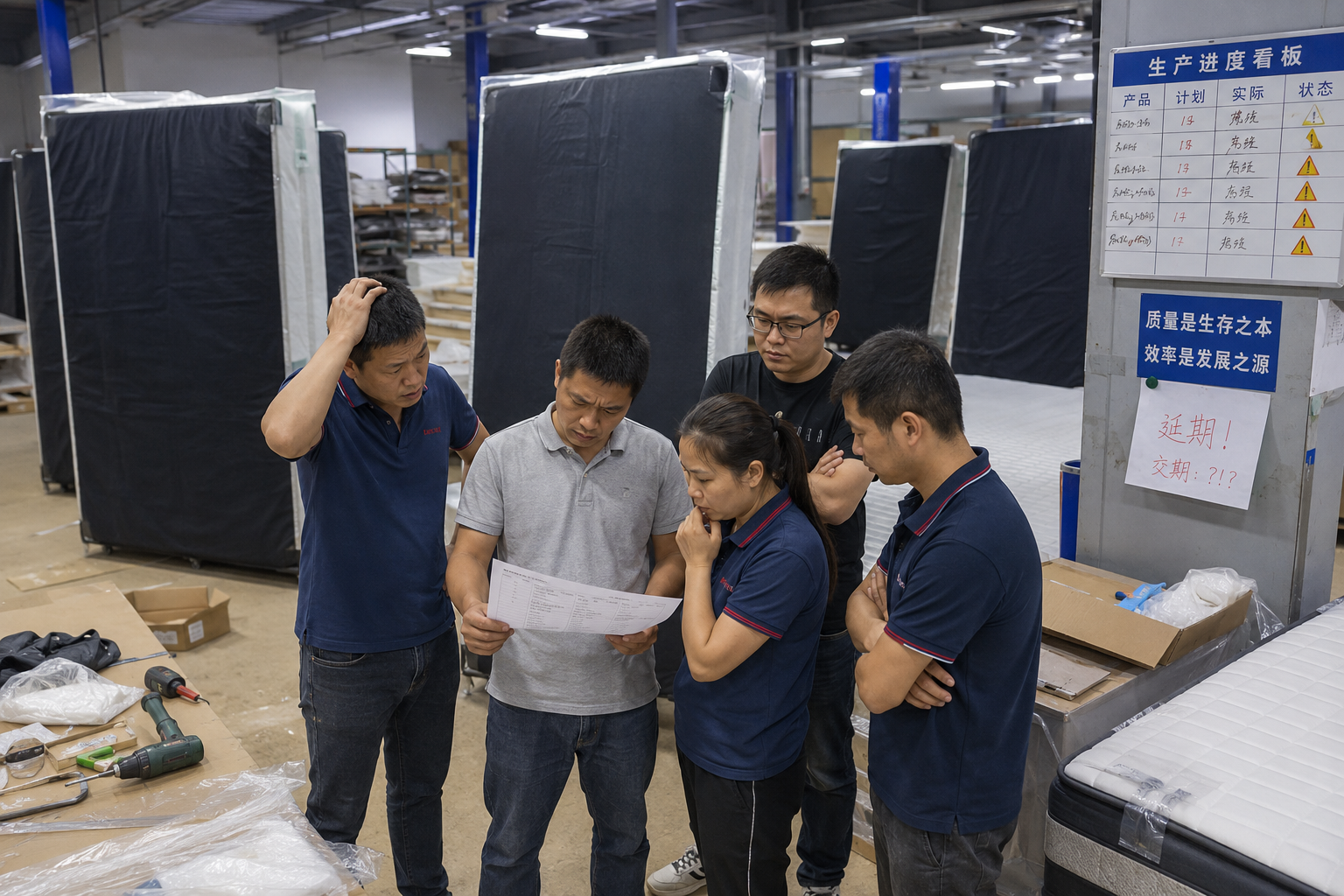
Don’t Let Summer Gaps Create China Supplier Problems: A Practical Guide for Importers – Summer can be a difficult period for importers managing suppliers in China.
The issue is not that China stops producing during the European and North American holiday season. In many cases, factories continue working as normal. The risk is that the buyer’s key contacts, product managers, approval teams, freight partners or quality-control staff may be unavailable at different times.
That can create a gap in communication and control.
A supplier may be waiting for artwork approval. Production may be behind schedule. A component may be unavailable. Packaging may need clarification. A factory may make a decision to keep the order moving, but that decision may not match the buyer’s requirements.
By the time the buyer returns from annual leave, the goods may already be finished, packed or close to shipment.
This is why summer planning should not only focus on your own holiday cover. It should also cover supplier management, production visibility, approvals, quality checks and shipping decisions.
Summer gaps can create silent supplier problems
Most serious China sourcing problems do not begin with a dramatic event. They often start with a small unanswered question.
For example, a factory may ask whether it can use an alternative component because the original one is delayed. The buyer may not respond quickly. The factory may assume approval, choose a substitute or delay production without clearly explaining the impact.
The same can happen with:
- Colour approvals
- Packaging artwork
- Carton markings
- Product labels
- Material substitutions
- Sample sign-off
- Delivery dates
- Inspection bookings
- Freight instructions
A supplier may be focused on keeping its production line moving. However, keeping production moving is not always the same as protecting the buyer’s specification, quality requirements or delivery plan.
This is one reason why supplier verification and supplier management are not the same thing. A factory may have passed an initial supplier check and still require regular communication, production monitoring and quality control once orders begin.
Do not assume the supplier will raise every issue
Many importers believe that a supplier will immediately report a problem.
Good suppliers usually try to do this. However, factories may be reluctant to report delays, material shortages or production difficulties early. They may hope to resolve the issue internally before informing the buyer. They may also not understand which changes require formal approval.
This can create a dangerous situation where the buyer receives reassuring updates while the real position is unclear.
For example, a supplier may say that production is “on schedule” even when key materials have not arrived, the order has not started in full, or packaging is still awaiting confirmation. The supplier may be using a different definition of “on schedule” to the buyer.
That is why buyers should ask clear questions rather than relying on general updates.
Instead of asking, “Is everything okay?”, ask:
- Has all raw material arrived at the factory?
- Has bulk production started?
- What quantity has been completed?
- Are there any material, component or packaging delays?
- Are there any changes from the approved sample or purchase order?
- Is the factory still working towards the agreed shipment date?
- When will the order be ready for inspection?
Clear questions produce clearer answers.
Summer cover should include approval authority
One of the biggest problems during holiday periods is unclear approval responsibility.
A supplier may send revised artwork, a sample photo or a request to change a component. The normal buyer contact may be away. Other staff may see the email but may not feel authorised to make a decision.
The supplier is then left waiting.
To avoid this, each order should have a named main contact and a named back-up contact. Both should understand what they can approve and when they need to escalate a decision.
Before staff holidays begin, confirm:
- Who can approve product changes
- Who can approve packaging and labelling
- Who can confirm revised delivery dates
- Who can approve inspection bookings
- Who can issue or approve freight instructions
- Who can authorise payment where required
The supplier should also be told that no changes to specification, materials, construction, packing or markings can be made without written approval.
This is especially important for repeat orders. A supplier may assume that a previous version of a product, carton or label is still acceptable. Buyers should not assume that the factory will automatically use the latest approved version.
Protect production schedules before problems become urgent
Summer can also create a false sense of security around production timing.
A supplier may confirm a shipment date several weeks in advance. The buyer may then reduce contact because the order appears to be under control. However, production plans can change quickly due to material availability, labour allocation, machine downtime, other customer orders or shipping capacity.
When the buyer returns from leave, there may be very little time left to correct a delay.
A practical approach is to agree a simple milestone plan for each order:
- Raw-material arrival date
- Production start date
- Mid-production completion target
- Packing completion target
- Inspection date
- Container-loading or shipment date
The factory should provide updates against these milestones. This helps identify delays before they become expensive.
It also helps prevent a common problem: booking a pre-shipment inspection too late. If goods are already fully packed, sealed or loaded before the inspection is arranged, the available options become limited.
A quality inspection remains important, but it should be part of an ongoing control process rather than the only point at which the buyer checks the order. Read our article on why QC inspections alone are not enough when buying from China.
Keep material and packaging changes under control
Material substitutions are a common source of avoidable supplier disputes.
A factory may believe that a substitute is equal or better. However, it may affect product appearance, performance, compliance, packaging fit, durability or customer expectations.
The same applies to packaging. A small change to an inner box, carton size, insert, label position or shipping mark can create warehouse problems, retailer rejection or additional relabelling costs.
Before the summer period, issue the supplier with a clear and current order pack. It should include:
- Purchase order
- Approved product specification
- Approved sample reference
- Bill of materials where relevant
- Packaging instructions
- Artwork and label files
- Carton markings
- Quantity breakdown
- Inspection requirements
- Shipment deadline
- Named approval contacts
This gives the factory less room to rely on assumptions.
It also supports the wider principle set out in our article on supplier verification in China not being just a paper exercise. Documents matter, but buyers also need to understand what is happening in the actual factory and whether the supplier is following the agreed process.
Plan QC Inspections and Freight early
Inspection and shipping decisions often become rushed when communication drops during summer.
A factory may suddenly advise that goods are finished and request immediate shipment. The buyer may then have to arrange inspection, approve payment and secure freight capacity within a very short period.
That creates pressure. Under pressure, buyers may accept less visibility than they normally would.
Where possible, book China quality inspection services in advance based on the expected completion date. The inspection date can be adjusted if necessary, but early planning gives you more control.
It is also sensible to confirm who will manage freight instructions while key team members are away. Delayed shipping instructions, missed vessel cut-offs or late document approvals can turn a manageable production delay into a costly logistics issue.
Local support can close the communication gap
Importers do not need to manage every supplier conversation personally. However, somebody needs to be responsible for maintaining visibility.
For businesses with several suppliers, multiple orders or limited internal resources, local support can provide an additional layer of control. A China-based team can follow up with suppliers, clarify production status, check samples, visit factories where needed, support negotiations and help prevent unanswered questions from becoming production problems.
This is particularly valuable when a business has outgrown informal supplier management. Our article on when ad hoc buying from China stops working explains why reactive buying can become difficult as order volumes, supplier numbers and product complexity increase.
The warning signs are often simple: slow supplier replies, unclear delivery updates, repeated quality issues, missed approvals or too much reliance on one person to manage every supplier relationship.
These are also signs that a business may benefit from ongoing China sourcing support.
For broader supplier management, sourcing support and operational follow-through, visit our Buying from China services page or learn more about Buying from China Consulting.
Final thought
Summer should be a time when your team can take leave without worrying that China orders are drifting out of control.
The key is preparation.
Confirm your supplier contacts. Set approval responsibilities. Freeze specifications and packaging instructions. Agree production milestones. Book inspections early. Make sure someone is monitoring progress while key people are away.
A small communication gap can quickly become a delayed shipment, incorrect product, packing error or unexpected cost. Clear planning and reliable local support can help keep your China supply chain moving in the right direction throughout the summer.
If you need China Support during the summer, please don’t hesitate to contact me below.
Mobile- Messenger (Click to Connect)

Or at the following numbers:
(Europe/ Rest of the World) +353 1 885 3919
(UK) +44.020.3287.2990
(North America) +1.518.290.6604
Or email me, Aidan Conaty
Aidan Conaty
Frequently Asked Questions
Why can summer create supplier problems when buying from China?
Summer can create communication gaps when buyer contacts, approval teams, freight partners or supplier managers are away at different times. Production may continue, but decisions on materials, packaging, samples, inspections or shipment dates may be delayed or made without clear buyer approval.
What should importers confirm with China suppliers before staff holidays?
Importers should confirm production milestones, shipment dates, inspection timing, named approval contacts, packing instructions, artwork, labels, material specifications and the process for approving any changes.
Can a China supplier change materials or packaging without approval?
A supplier should not change materials, components, packaging, labels or carton markings without written buyer approval. Buyers should issue clear and current specifications and tell suppliers that no substitutions or amendments are permitted without authorisation.
When should a pre-shipment inspection be booked for summer production?
A pre-shipment inspection should be planned before the expected completion date, with enough time to review the results and resolve any issues before shipment. Booking too late can mean goods are already packed, sealed or loaded before an inspection takes place.
How can local China sourcing support help during summer?
Local China sourcing support can help maintain supplier communication, follow up on production progress, clarify delays, review documentation, coordinate inspections and provide practical visibility while the buyer’s own team is away.